
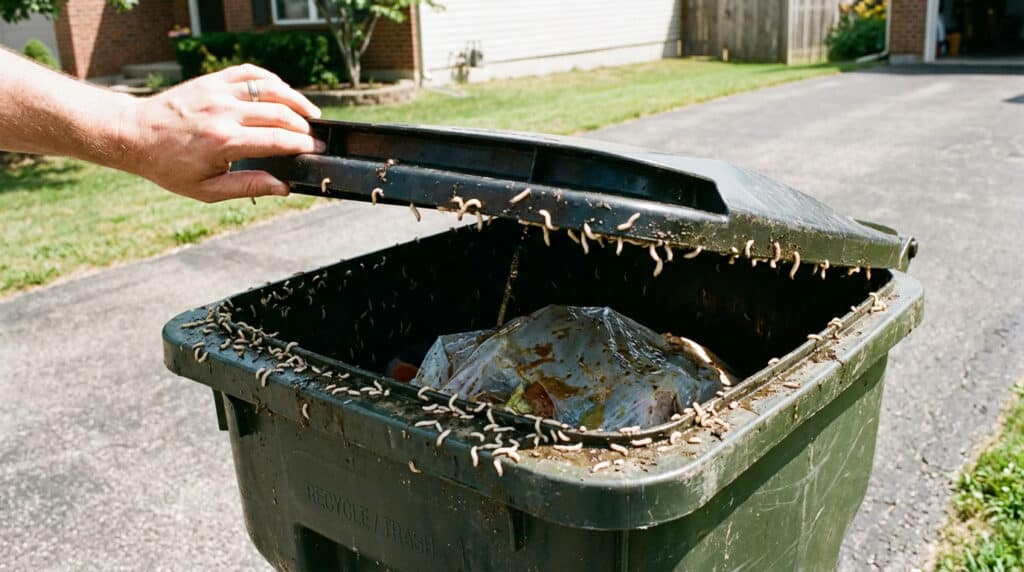
If you open your lid after trash day and find maggots in your garbage can, it feels sudden and awful. In reality, it is usually the same chain reaction every time: food residue + heat + moisture + time. That is why maggots in trash cans tend to spike during hot stretches in Macomb County, especially in places like Macomb Township, Shelby Township, Clinton Township, Washington Township, Sterling Heights, and Chesterfield Township where summer heat can turn a dirty bin into a fly magnet fast.
This guide covers what causes maggots in a trash can, how to remove them safely, and what homeowners can do to prevent repeat problems. If this is a recurring issue, regular trash can cleaning in Macomb County can help remove the odor and residue that keeps attracting flies back week after week.
How to Get Rid of Maggots in a Trash Can Fast
If you are dealing with maggots right now, the goal is to kill the larvae, remove the residue they are feeding on, and dry the bin completely so the cycle does not restart.
- Move the bin to a safe spot. A driveway or gravel area is easier to clean than grass. Wear gloves and keep kids and pets away.
- Use very hot water carefully. Pour hot water into the bottom and along the inside walls to kill many larvae on contact.
- Scrub the bottom, seams, lid, and hinges. Eggs, slime, and food residue often hide in corners and creases.
- Rinse and drain fully. Do not leave standing water in the can.
- Let the bin dry completely. Heat and airflow help. Moisture left behind can keep the problem going.
- Fix the cause before the next pickup. Tighten bags, reduce wet food waste, and keep the lid fully closed.
For homeowners who are also fighting strong odor, read how to get rid of trash can smell in Macomb County. Smell and maggots usually come from the same buildup.
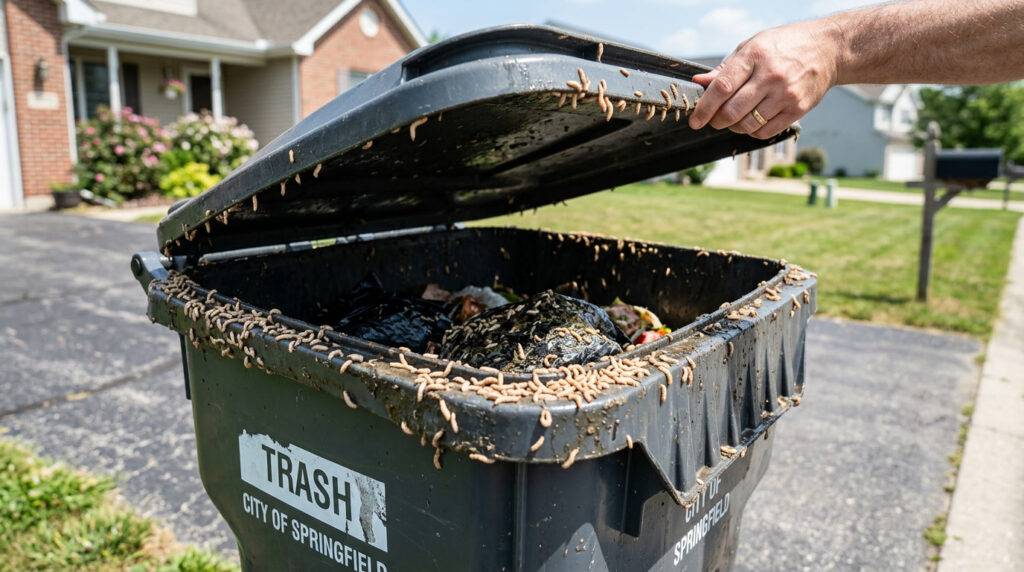
What Causes Maggots in a Garbage Bin?
Maggots are fly larvae. Flies are drawn to warm, damp, odor-producing trash, especially when food waste is present. Once flies find a good place to land and lay eggs, the problem can escalate quickly in hot weather.
In plain terms, if you remove food, moisture, odor, and easy access, you usually remove the conditions that lead to maggots in a trash can.
1. Food Waste and Leaky Bags
Meat packaging, dairy, fruit scraps, seafood shells, and anything wet or sticky are common triggers. Even if everything is technically bagged, a small leak at the bottom of the can can create the perfect feeding area for fly larvae.
2. Heat and Humidity
Summer heat speeds up decomposition and odor. A bin sitting in direct sun in Macomb Township or Washington Township will usually develop stronger smells faster than a shaded bin, and stronger smells attract more flies.
3. Moisture in the Bottom of the Bin
Wet trash, pooled liquids, condensation, and food residue all create the damp environment maggots need. This is one reason maggot calls often increase after rainy, humid, and hot stretches.
4. A Lid That Does Not Stay Fully Closed
Loose bags, overflowing trash, and lids left cracked open make it easier for flies to get inside. Once they can access the food source, the rest of the cycle is easy.
5. Old Residue That Never Got Cleaned Out
One of the biggest hidden causes is the sludge layer that builds up slowly at the bottom and along the sidewalls of the can. That grime feeds odor, attracts flies, and makes repeat infestations more likely. This is why articles like how to sanitize a trash bin and bacteria and germs in trash cans are closely tied to maggot prevention.
Why Hot Weather Makes the Problem Worse
Maggots and heat go together. In Macomb County, the biggest spikes usually happen during hot summer weeks, holiday delays, and stretches when food waste sits longer than normal. Heat intensifies smell, speeds up breakdown, and makes a dirty can far more attractive to flies.
This is also why compost smells and food waste complaints often overlap with maggot complaints. When bins smell stronger, they also tend to draw more fly activity.
A Simple Macomb County Trash-Day Routine to Prevent Maggots
You do not need a complicated system. A simple trash-day routine can dramatically reduce the chance of getting maggots in your trash can.
The Night Before Pickup
- Tie every bag tightly.
- Double-bag anything wet or likely to leak.
- Rinse meat trays or sticky containers before tossing them.
- If it is going to be hot, take the smelliest kitchen waste out sooner instead of letting it sit.
The Morning After Pickup
- Check for liquid or loose residue in the bottom of the bin.
- Leave the lid open briefly to air out if the area is secure.
- Move the bin back into shade when possible.
If You Miss Pickup
- Pull the smelliest food waste into a sealed bag or container.
- Keep the lid closed tightly.
- Store the can out of direct sun if possible.
- Avoid tossing loose scraps into the can until the next set-out day.
If your household is trying to decide how often routine cleaning should happen, see how often should you clean your trash bins.
Compost, Food Waste, and Why They Lead to More Calls
Compost smells, food scraps, and leaking organic waste are some of the biggest reasons homeowners call about maggots. You do not need to stop composting or food-waste separation, but you do need a cleaner holding routine.
- Keep scraps sealed. Use a countertop container with a lid.
- Freeze the worst offenders. Meat scraps, seafood shells, and highly odorous leftovers are much easier to manage when kept frozen until trash day.
- Keep compost materials dry when possible. Excess moisture increases smell and fly activity.
- Do not let loose food residue coat the can. Once the inside of the bin gets seasoned with odor, the problem gets harder to control.
Prevention Tips That Actually Make a Difference
- Seal bags tightly. Loose, open, or leaking bags are one of the fastest ways to invite flies.
- Keep the lid fully closed. A cracked lid makes access easy.
- Store bins in shade. Less direct heat usually means less odor and less fly pressure.
- Reduce moisture. Drain wet food, avoid tossing open liquid containers, and keep pooled water out of the bin.
- Clean on a schedule. Waiting until the can is disgusting usually means the problem is already advanced.
- Stay ahead of odor. Homeowners dealing with recurring smell should also review trash can odor prevention and removal tips.
Safe Removal Methods for Homeowners
Before cleaning, wear gloves and try to work on a dry day so the can can air out well afterward.
Very Hot Water and Scrubbing
This is usually the fastest and most practical home reset. Hot water can kill many larvae on contact, but scrubbing is what removes the slime and hidden residue that keeps flies coming back.
Vinegar and Water
A vinegar solution can help loosen grime and reduce smell. It is useful as part of a cleaning routine, especially when followed by scrubbing, rinsing, and full drying.
Food-Grade Diatomaceous Earth or Salt
These can help only when the area stays dry. They are not a substitute for cleaning and should be used carefully.
Full Sanitizing
If the inside of the can still smells or feels slick after a basic rinse, the deeper issue is usually leftover residue. That is when a more complete cleaning process matters. See how to sanitize a trash bin at home for a fuller breakdown.
What Not to Do
- Do not mix cleaning chemicals. Never combine bleach with ammonia or other cleaners.
- Do not leave dirty runoff unmanaged. Keep rinse water controlled when possible.
- Do not ignore the lid and hinges. Eggs and grime often collect there.
- Do not assume a quick rinse solved it. If the odor remains, the attractant often remains too.
Why Spring Cleaning Still Matters for Summer Maggot Prevention
Maggots are usually a summer problem, but the setup often starts earlier. After winter, bins can have a layer of frozen-thaw residue, sticky leaks, and old grime sitting in the bottom. Once temperatures rise in Clinton Township, Shelby Township, Chesterfield Township, and across Macomb County, that old buildup becomes prime odor and fly bait.
A spring trash bin reset helps reduce the chance that summer heat turns old residue into a full maggot problem later.
For HOAs, Property Managers, and Shared Waste Areas
In shared trash areas, flies and maggots often become a complaint issue before they become a sanitation discussion. The basics still apply:
- Keep lids closed.
- Avoid missed service windows.
- Reduce loose trash and overflow.
- Clean dumpster pads and enclosure areas regularly.
Regular maintenance helps shared areas stay cleaner, reduces odor complaints, and makes the property easier to manage.
When It Is Time to Call in Help
If maggots keep returning, the smell never really goes away, or you are dealing with hot-weather repeat problems, the real issue is often the residue layer left behind inside the bin. A deeper reset is usually faster than trying to fight the same problem over and over.
Bin Dazzled provides curbside trash can cleaning in Macomb County, including service areas such as Macomb Township, Shelby Township, Sterling Heights, Clinton Township, Washington Township, and Chesterfield Township. We help homeowners remove odor-causing buildup, grime, and unsanitary residue so bins are easier to live with during the hottest parts of the year.
If you are dealing with odor, flies, maggots, or recurring buildup, you can contact Bin Dazzled to schedule service.
Quick Checklist: How to Prevent Maggots in a Trash Can
- Tie bags tightly.
- Double-bag leaky food waste.
- Keep the lid fully closed.
- Store the bin in shade when possible.
- Freeze or seal the smelliest scraps until pickup day.
- Remove residue before it builds up.
- Clean on a routine schedule instead of waiting for a problem.
Frequently Asked Questions
How fast can maggots appear in a trash can?
In hot weather, the cycle can move quickly. Once flies find odor, food residue, and moisture, eggs can hatch fast enough to create a noticeable problem within a short window.
Why do maggots keep coming back after I rinse the bin?
A quick rinse often leaves behind the slime, bacteria, and food residue that attracted flies in the first place. If the smell remains, the root cause often remains too.
What food waste causes the most maggot problems?
Meat packaging, seafood shells, dairy waste, fruit scraps, and anything wet or leaking tend to create the strongest odor and the biggest fly attraction.
Can compost smells make maggot problems worse?
Yes. Strong food-waste and compost odors can increase fly activity, especially when scraps are wet, warm, and not sealed well.
How do I prevent maggots after a missed pickup?
Remove or seal the smelliest scraps, keep the lid fully closed, store the can in shade, and avoid adding loose food waste until the next set-out day.
Is professional trash can cleaning worth it for repeat maggot problems?
For repeat summer infestations, recurring odor, or bins with a heavy residue layer, professional cleaning can be the fastest way to reset the problem and reduce the chance of it returning.
Suggested external references for publishing: