
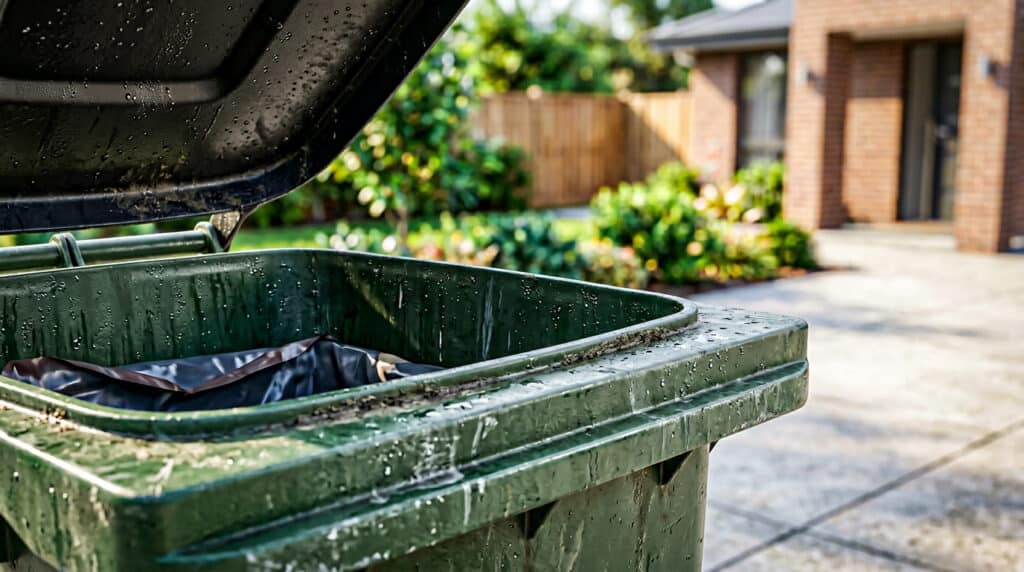
Most homeowners do not think much about the inside of a trash bin until the smell gets bad, the lid feels grimy, or something leaks onto the driveway. But dirty bins are not just an odor problem. They can also become a place where bacteria and germs collect, especially when food residue, moisture, and time all stack up inside the can. The presence of bacteria and germs in trash cans can lead to health issues if not addressed properly.
In Macomb County communities like Macomb Township, Shelby Township, Clinton Township, Washington Township, and Chesterfield Township, that buildup tends to follow a familiar pattern. Hot summer weeks can speed up odor and bacteria growth, while freeze-thaw cycles and wet winter mess can leave residue stuck to the bottom of the bin long after trash day.
This guide explains what causes bacteria and germs to build up in household trash cans, where those germs tend to spread, and what homeowners can do to keep bins cleaner and more sanitary. If your bigger issue is recurring odor, start with our guide on how to get rid of trash can smell. If you want the step-by-step cleaning side, read our post on how to sanitize a trash bin. Understanding the impact of bacteria and germs in trash cans is crucial for maintaining a healthy home.
Why dirty trash cans become a bacteria problem
It is important to recognize that bacteria and germs in trash cans can pose a significant risk to your health and the health of your family.
A household trash can collects more than garbage bags. It collects leaked liquids, food drips, sticky residue, and grime that cling to the plastic over time. Add warmth and moisture, and you create a surface where bacteria and other germs can keep building up between pickups.
The usual cycle looks like this:
- Residue sticks to the bottom, sides, rim, and underside of the lid.
- Bacteria feed on that residue and continue multiplying as waste breaks down.
- Odor gets stronger as moisture and organic material sit longer.
- Germs spread through hands, handles, lid contact, bag leaks, and whatever surface you touch next.
That is why an “empty” trash can can still smell bad and feel dirty. The bag may be gone, but the film feeding the problem often stays behind.
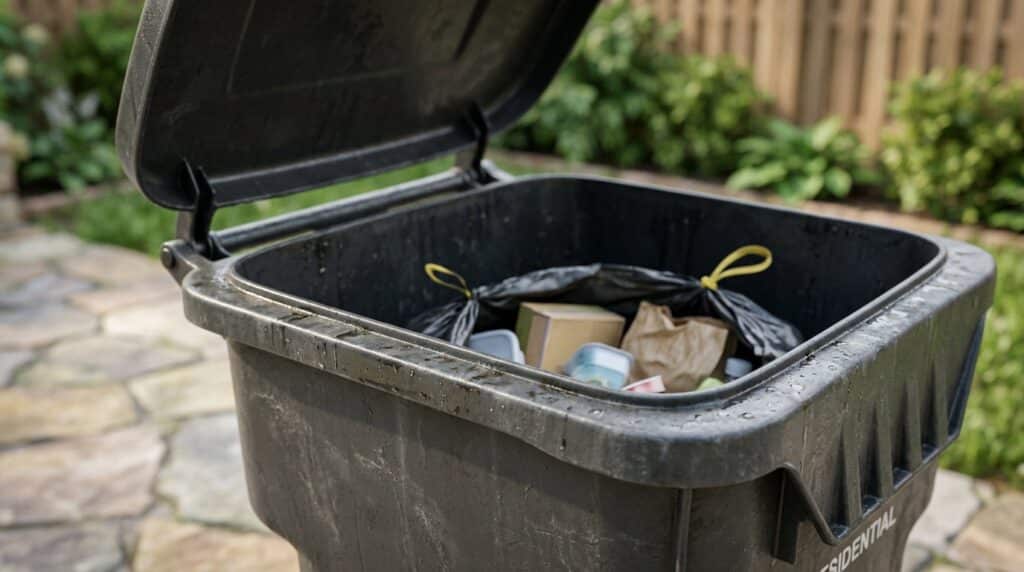
What bacteria and germs are commonly discussed around dirty trash cans?
It helps to keep this practical. Most homeowners do not need a science-class list. The bigger point is that dirty bins can hold the kinds of germs commonly associated with food waste, wet surfaces, and high-touch contamination.
1) Germs linked to food residue and spoiled waste
Household trash often includes meat packaging, old leftovers, dairy containers, fruit scraps, and other organic material that leak into the bottom of the can. In discussions of dirty trash cans, bacteria like E. coli, Salmonella, Listeria, and Clostridium are commonly mentioned because they are associated with contaminated food residue and wet organic waste.
These are most likely to matter when:
- food waste leaks out of the bag
- the bottom of the bin stays damp between pickups
- old residue is left in place week after week
2) Germs that spread through touch
Handles, lids, and rims matter because they are the parts homeowners touch repeatedly. Even if the inside of the bin is the main source of grime, that contamination can transfer to the lid, the handle, the wheels, and then onto garage doors, car trunks, side doors, or refrigerator handles after you move the can.
This is part of why dirty trash cans feel worse than they look. The germs do not stay neatly contained inside the can.
3) Germs that thrive in damp corners and residue layers
Any place inside the bin that stays wet tends to become a problem area. Bottom corners, lid undersides, rim channels, and pooled liquid at the base all create the kind of environment where grime and bacteria can hold on longer. That same buildup is often what keeps odor coming back even after pickup day.
Where germs from the trash can usually spread
For most homeowners, the bigger concern is not naming every bacteria type. It is understanding how the mess travels.
- Hands: opening the lid, dragging the bin to the curb, tying bags, or adjusting a stuck liner.
- Handles and lids: the highest-touch parts of the bin usually get the least attention during a quick rinse.
- Driveways and garage floors: bag leaks and dirty rinse water can spread grime outside the can itself.
- Nearby surfaces: side doors, garage handles, outdoor faucets, and even vehicle trunks after moving the bin.
If your bin feels slick inside or has a slimy layer on the bottom, that is a good sign the can needs more than a casual rinse. It usually means buildup has had time to settle in.
Why this matters more in Macomb County than generic advice suggests
Most generic trash-bin cleaning articles skip the local reality: weather changes how fast the problem builds and how long it sticks around.
Summer in Shelby Township, Clinton Township, and Washington Township
Heat speeds up decomposition. That means stronger smells, faster bacteria growth, and a much shorter timeline between “normal trash” and “this bin is disgusting.” A warm week between pickups can be enough to create serious odor and grime.
Fall cleanouts in Macomb Township and Chesterfield Township
Move-ins, garage cleanouts, parties, tailgates, and end-of-season projects often mean heavier bags, more food waste, and more overstuffed bins. That usually leads to more leaks, more contact around the rim, and more residue left behind.
Winter freeze-thaw across Macomb County
Cold weather does not solve dirty-bin problems. It often freezes residue to the bottom and hides the mess until the next thaw. Then the same odor and grime come back, now mixed with slush, salt, and driveway runoff.
That is one reason recurring trash can cleaning in Macomb County can make more sense than waiting until the problem gets obvious.
How to reduce bacteria and germs in your trash cans
You do not need a complicated system. You need consistency.
1) Clean the bin shortly after pickup
The easiest time to clean a can is when it is empty. Removing residue early keeps bacteria and odor from stacking up.
2) Focus on the real problem areas
Do not just spray the inside and walk away. The worst buildup is usually on the lid underside, rim, handles, and bottom corners.
3) Dry the can completely
Moisture keeps the cycle going. A damp trash can is much more likely to hold odor and support more buildup.
4) Bag messy waste tightly
Leaking food waste, meat packaging, and wet trash are some of the biggest drivers of bacteria and odor. Double-bagging the messiest items helps more than most homeowners think.
5) Keep the lid closed whenever possible
A closed lid helps reduce rainwater, keeps pests out, and slows the buildup of extra grime from wind and loose debris.
6) Use a recurring routine when the problem keeps coming back
If you are constantly dealing with odor, slime, flies, or dirty handles, a recurring routine matters more than one deep clean. Our post on how often you should clean your trash bins explains how homeowners typically set that schedule.
When DIY bin cleaning stops being worth the hassle
For some households, a rinse and scrub every now and then is enough. But DIY usually stops working well when:
- odor keeps coming back right after pickup
- the inside of the bin feels slimy or sticky
- bags leak regularly
- the bin sits close to the garage, side door, or front walk
- you are tired of dealing with dirty runoff and scrubbing the same problem over and over
That is where professional curbside service can help. Bin Dazzled provides trash can cleaning in Macomb County designed around real neighborhood pickup routines. If flies and larvae are part of the problem too, our guide on maggots in trash cans covers what causes them and how to help prevent them.
Why cleaner bins matter for families, HOAs, and curb appeal
Dirty bins affect more than smell. They affect how your home feels when you pull into the driveway, what guests notice near the garage, and how quickly complaints travel in HOA-heavy neighborhoods where bins sit close together.
For homeowners, cleaner bins mean less odor, less grime, and fewer unpleasant surprises when taking out the trash. For property managers, landlords, and real estate professionals, clean bins support cleaner first impressions during turnovers, showings, and move-in prep.
Conclusion
Bacteria and germs in trash cans usually come down to the same practical issue: residue left behind too long. Once grime, moisture, and waste build up inside the can, the problem spreads through odor, dirty handles, leaks, and repeated contact.
The good news is that the solution is straightforward. Clean the problem areas, keep the can drier, stay consistent, and do not wait until the smell becomes impossible to ignore.
If you want a simpler routine for cleaner, fresher bins, Bin Dazzled makes it easy to keep up with professional curbside bin cleaning in Macomb County.
FAQ
What bacteria are commonly found in trash cans?
Dirty trash cans are often discussed in relation to bacteria associated with food residue and wet organic waste, including E. coli, Salmonella, Listeria, Clostridium, and other germs that thrive in dirty, damp conditions.
Can bacteria in a trash can make the bin smell worse?
Dirty trash cans are often discussed in relation to bacteria associated with food residue and wet organic waste, including E. coli, Salmonella, Listeria, Clostridium, and other germs that thrive in dirty, damp conditions.
Can bacteria in a trash can make the bin smell worse?
Yes. Bacteria feed on residue and moisture left behind inside the can, which is one reason odor often gets stronger the longer grime sits in place.
Where do germs usually spread from a dirty trash can?
They usually spread through the lid, handles, rim, wheels, and any leaks that drip onto the driveway or garage floor. Hands are the most common way contamination gets transferred to other surfaces.
How do I sanitize a trash bin at home?
Start by emptying the can fully, scrubbing away residue, cleaning the lid, rim, handles, and bottom corners, and then using a household-safe disinfecting approach. For a full walkthrough, see our guide on how to sanitize a trash bin.
Do cleaner bins help with flies and maggots?
They can. Flies are drawn to odor and residue. Removing the buildup that feeds odor can make trash cans less attractive during warmer weeks.