
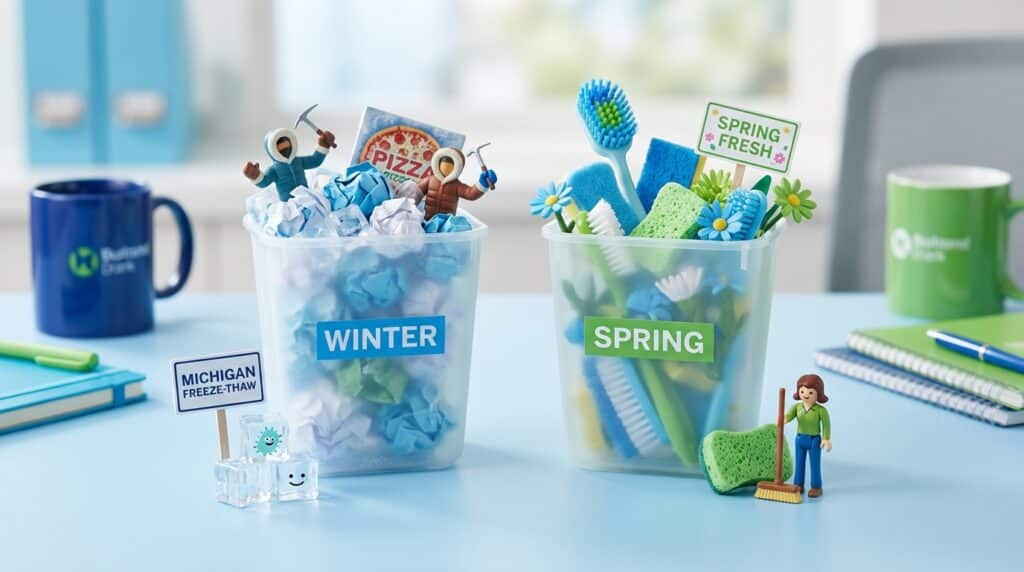
A Guide to Trash Bin Cleaning After Winter
If you live in Macomb County, you know the routine: one day it’s 18 degrees with a stiff wind, the next day everything’s dripping, slushing, and refreezing by night.
That freeze–thaw reality does more than make driving annoying. It turns your trash bin into a sealed-up winter time capsule of moisture, residue, and stuck-on waste—until spring shows up and everything wakes back up at once.
Here’s the part most people miss: winter doesn’t stop the mess. It freezes it in place.
Why Michigan Winters Turn Trash Bins Into Frozen Time Capsules
Trash bins aren’t insulated. They sit outdoors, exposed to snow, sleet, rain, and wind. When moisture gets into the cart—through an open lid, a lid that doesn’t seal well, or even condensation—it freezes.
When that happens, it doesn’t just make things cold. It bonds trash to the bottom and sides of the bin.
To ensure a hygienic space, consider implementing trash bin cleaning after winter as part of your spring routine.
Waste service providers consistently point out that winter moisture and liquids can freeze inside carts, causing bags and residue to stick and making bins heavier and harder to empty.
- Rain or melting snow can freeze inside the bin, locking trash in place
- Food liquids and beverage residue can freeze solid and form a stuck-on layer
That’s not a scare tactic. It’s basic physics—and Michigan does a lot of it.
What Builds Up Inside Trash Bins Over a Michigan Winter
You don’t need a lab report to know something’s off when spring hits. But it helps to understand what’s happening inside the bin.
1) The “trash glacier” at the bottom
Anything with moisture can freeze into a hardened layer:
- meat packaging drips
- soup or coffee remnants
- melted ice from party coolers
- rinsed containers that weren’t fully dry
Over time, this can create what many homeowners recognize as a trash glacier—a frozen mass at the bottom of the cart. When the bin is tipped on pickup day, that material may not slide out at all.
Waste haulers frequently note that frozen liquids can turn bins into heavy, stubborn containers that don’t fully empty, even when tipped.
How Winter Moisture Affects Recycling Bins in Michigan
Winter moisture doesn’t just affect trash. It can quietly ruin recyclables.
Cardboard absorbs moisture quickly. When it gets wet, it can:
- break down into pulp
- grow mold
- contaminate recycling loads
County recycling programs regularly warn that wet cardboard can compromise entire loads. If a recycling cart lid doesn’t fully close during snow or rain, spring often reveals damp, musty paper products that looked fine when they went in—until they weren’t.
Freeze-Thaw Cycles: Why Trash Bin Odors Return in Spring
In cold weather, food scraps and residue often freeze before they fully break down. When spring arrives and bins warm up, those materials start decomposing again.
Holiday season can make this worse. More gatherings often mean:
- more food scraps
- more packaging with residue
- heavier, wetter trash overall
Many waste service providers emphasize keeping lids closed in winter specifically because precipitation and food residue create bigger problems once temperatures rise.
Freezing slows things down. Thawing brings them back.
In Southeast Michigan, temperatures often bounce above and below freezing. That means residue can thaw just enough to become biologically active, then refreeze—over and over.
By the time consistent warmth returns, bins often contain the exact conditions that support odor and regrowth: moisture, organic residue, and warmer temperatures.
Simple Ways to Reduce Winter Trash Bin Buildup in Macomb County
You can’t control Michigan weather, but you can reduce how much moisture and mess gets trapped inside your bin.
Keep lids closed and carts positioned properly
Local waste providers consistently recommend keeping lids fully closed to limit snow and rain getting inside the cart.
Place bins correctly on pickup day during snow season
Michigan municipalities regularly remind residents to avoid placing carts where plows can hit or bury them.
Winter guidance commonly suggests placing carts 3–5 feet off the pavement into the driveway, giving plows room to pass and reducing the chance of bins being buried or tipped.
Placing bins on snow piles is also discouraged. Snowbanks shift, melt, and refreeze—often tipping carts and forcing moisture inside.
Drain liquids and bag wet waste carefully
Small habits make a difference by spring:
- Let liquids cool or solidify before disposal
- Double-bag especially wet food waste
- Tie bags tightly to prevent drips coating the bin
Less liquid now means less frozen residue later.
Why Spring Smells Worse Than Winter for Michigan Trash Bins
In deep winter, bins don’t smell much. Cold air suppresses odor, and frozen waste isn’t very active.
Spring changes everything:
- snow melt adds moisture
- warmer days speed decomposition
- sunlight heats dark plastic carts
- bins start “breathing” odors again
If something was frozen to the bottom all winter, it’s often the oldest, wettest material—the exact thing you don’t want warming up first.
The Real-World Problems Caused by Dirty Trash Bins After Winter
This isn’t just about something being gross.
Odors that travel
Once thaw hits, smells can appear fast and spread—especially in tightly spaced neighborhoods or shared waste areas.
Pests notice quickly
As bins warm up, decomposing organics become attractive again. Spring pests don’t need an invitation; they just need a signal.
Missed or incomplete pickups
When trash is frozen to the bin wall or bottom, the truck can tip the cart and still leave material behind. That means extra trash, more odor, and a bigger problem by the next collection day.
Bins take a beating
Cold weather makes plastic less forgiving. Frozen contents add weight and stress, making carts harder to handle and easier to damage.
Why Spring Trash Bin Cleaning Is the Reset Your Curb Needs
For homeowners looking for a simple, curbside solution, professional trash bin cleaning after winter helps remove frozen residue, odors, and buildup that regular trash bags don’t address.
Bin Dazzled specializes in this kind of reset, combining local knowledge with practical, no-hassle service.
👉 Learn more about our approach on our Who We Are page:
https://bindazzled.com/who-we-are-bin-dazzled-trash-bin-dumpster-cleaning/
Even with good winter habits, most bins come out of winter with:
- frozen liquid residue
- stuck-on waste
- moisture that feeds odors
- buildup you can’t reach with a quick rinse
Spring trash bin cleaning removes the layer winter leaves behind.
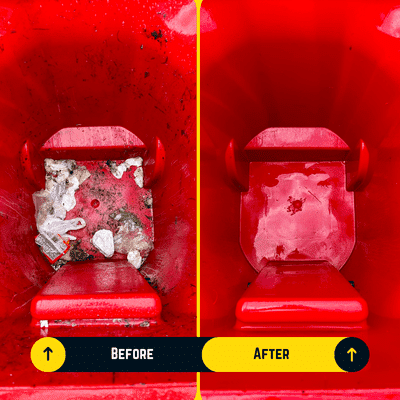
What Professional Trash Bin Cleaning Involves (and Why It Beats Hosing It Out)
Most DIY cleanouts stop when the bin looks better. The smell comes back because residue is still there.
Professional services like trash bin cleaning in Macomb County focus on removal, not masking:
- High-pressure washing to strip stuck-on grime
- Hot water (when used) to break down grease and residue
- Sanitizing and deodorizing designed for waste containers
- Attention to problem areas: bottom edges, seams, and lids
This is why professional cleaning delivers longer-lasting results than a garden hose.
Spring Trash Bin Cleaning for HOAs, Rentals, and Shared Properties
Shared waste areas amplify odor, complaints, and pest activity once temperatures rise.
For HOAs, rental properties, and multi-unit buildings in Macomb County, spring trash bin cleaning helps reset shared spaces and reduce recurring issues throughout the warmer months.
Property managers in Shelby Township and surrounding communities often use seasonal bin cleaning as a low-effort way to improve tenant satisfaction and curb appeal.
👉 Learn more about service availability here:
https://bindazzled.com/shelby-township-trash-can-cleaning/
Ready for a Spring Trash Bin Cleaning in Macomb County?
If your bin smells like it’s been “marinating” since January, spring trash bin cleaning in Macomb County is the easiest way to reset your curb without scrubbing, splashing, or runoff.
Bin Dazzled makes it simple:
- Book a spring cleaning
- Request a quote for shared or multi-unit bins
- Set up recurring service so buildup doesn’t come back
Final Thoughts: Clean Trash Bins Make the Whole Property Feel Cared For
After a Michigan winter, your trash bin has been through moisture, freezing, thawing, and months of buildup out of sight.
Spring is when it all shows up.
A spring bin cleaning is a simple reset that makes trash day easier, reduces odors, and helps keep pests from treating your curb—or your dumpster area—like a buffet.
Clean bins don’t just smell better. They make the whole property feel cared for.
Why does trash get stuck in the bin during winter?
Moisture from snow or rain can get into the cart and freeze. When it freezes, it bonds bags and loose waste to the bin walls and bottom, making it hard for everything to dump out.
Why do bins smell worse in spring than in winter?
Cold temperatures suppress odor and slow decomposition. When spring warms things up, frozen residue thaws and organic material starts breaking down again—so smells come back fast.
Can wet cardboard really ruin recycling?
Yes. Cardboard absorbs moisture easily, and wet cardboard can contaminate recycling loads. Store cardboard dry and keep recycling cart lids closed.
Where should I place my bin during snow season?
Michigan winter guidance commonly recommends placing carts 3–5 feet off the pavement into your driveway to help snowplows and avoid carts getting hit or buried.
Should HOAs and property managers care about bin cleaning?
Yes—because shared waste areas can amplify odors, complaints, and pest attraction. A spring reset helps keep common areas cleaner and reduces recurring headaches once temperatures rise.